 Minnesota Zen Meditation Center
About the center
Minnesota Zen Meditation Center was founded in 1972 by Dainin Katagiri Roshi (Roshi is a title of respect for a senior Zen teacher), who was invited to come from California to teach a group of people interested in the dharma, the Buddha’s teaching.

Since 1972
After Katagiri Roshi’s death in 1990, Shohaku Okumura served as interim head teacher until the installation of Karen Sunna, one of Katagiri Roshi’s 12 dharma heirs. Succeeding Karen were Tim Burkett and Ted O’Toole. The current Guiding Teacher is Ben Connelly.
MZMC is a priest training center, and community members greatly value the variety of teaching voices available to them.
Everyone is welcome, regardless of practice experience: first-time visitors, those just beginning a meditation practice, and long-time students, current and returning.
Visitors who may be expecting to find an exotic group of people are sometimes surprised to find that the sangha, the community, is made up of average, householding Americans who are simply committed to Buddhist practice. People who participate are encouraged to establish meditation practices that work for them, and to study and practice at their own pace.
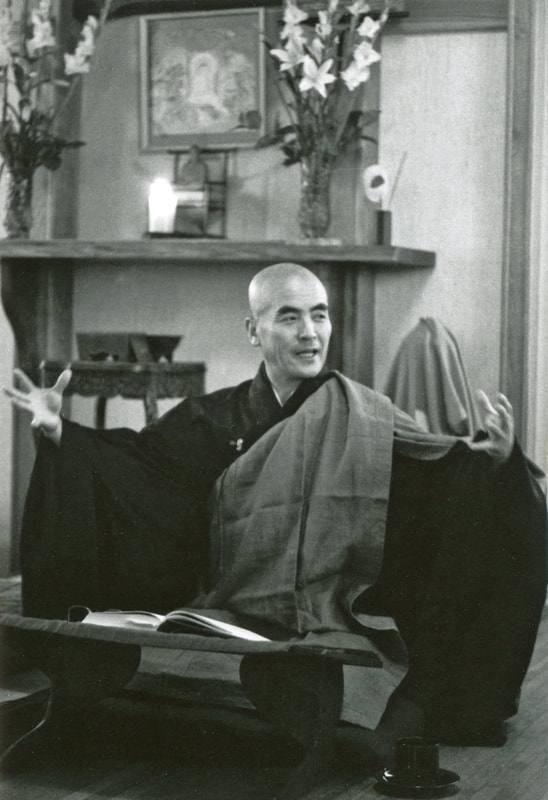
In a teacher’s words
Zen has a beautiful history and tradition that has helped people to awaken for centuries to vivid life here and now. At the same time, Zen has always adapted its forms and traditions as it has encountered new eras and new cultures. At MZMC we have the utmost respect for, and provide opportunities to practice in, the traditional way. We also provide opportunities to practice without the traditional accoutrements, in order to allow space for new ways of expressing the essence of Zen practice to emerge.
Mission, vision and values
Minnesota Zen Meditation Center makes a welcoming space for people to awaken wisdom and compassion, to embody Buddhist teachings, to honor our ancestors and descendants, and to joyfully serve our wider communities.
We envision a world grounded in generosity, compassion and wisdom.
- Compassion
- Knowing that all is interdependent and nothing is separate from ourselves, we strive to be compassionate in all our activities.
- Tradition
- We embrace the Buddhist and Soto Zen teachings and practices that have been handed down to us. We honor the people who have embodied the tradition and passed it on.
- Practice
- We value and are open to new and different approaches to the practice of Zen Buddhism. We honor the needs of our community and seek to listen and incorporate feedback.
- Community
- A spirit of cooperation guides our relationships with each other within the Zen Center community. We support and encourage one another on our spiritual paths and in our daily activities.
- Equity and inclusion
- We welcome every person who seeks to do Zen practice. We work to remove barriers based on race, ethnicity, gender identity, religion, class, sexual orientation, age, and ability. We thrive by celebrating what we share and our differences.
- Engagement
- We are committed to being fully engaged in our day-to-day life, with family and friends, at work and play, and with the larger community, nation and world in which we live.
People and governance
MZMC is a member-supported non-profit organization, operated by a board of directors and a small staff. It uses the Carver Model of Governance. To request a current copy of the by-laws and governance policies, contact the office at info@mnzencenter.org.
- Teachers
The guiding teacher and the 21 priests and lay teachers who practice and teach alongside him.
- Board of directors
Members elect the board. It meets monthly, generally on the third Sunday at 11:30 am, and the meetings are open to the public. Meeting notes are posted.
- Ethical conduct and precepts
The statement of ethical conduct, the canons of conduct, and the complaint resolution procedure.
- Equity, inclusion and accessibility
How the center works to remove barriers based on race, ethnicity, gender identity, religion, class, sexual orientation, age, and ability.
- History of inclusivity
A timeline of diversity, equity, inclusion and accessibility at MZMC since its founding.
Lineage and history
- The Katagiri Project
Dainin Katagiri (1928 to 1990) was one of the prominent Soto Zen masters who brought Buddhism to America in the twentieth century. His biography, lineage, books, photographs and recorded talks.
- The Dainin Katagiri audio archive
Recordings of Katagiri Roshi’s talks.
- Our building
In 2022 MZMC completed the renewal of its building on the shore of Bde Maka Ska, after a long process of visioning, planning and fundraising.
- MZMC in the media
Interviews, articles and radio pieces about the center and its teachers.
Membership and support
Membership support is vital to continued practice and programming at MZMC. All support is valued and appreciated.
- Become a member
What membership means, how to join, and how to decide on a pledge. There is no set membership rate.
- Give online
Make a donation that is not tied to yearly membership.
- Planned giving
Naming MZMC as a beneficiary, so the center can continue for many years to come.
- Scholarships
Reduced rates for classes and retreats when cost is a concern.
- Volunteer and work practice
Work practice days through the year. MZMC is run almost solely by volunteers.
Visiting
- Contact, directions and parking
3343 East Bde Maka Ska Parkway, Minneapolis. Phone (612) 822-5313. Three places to park.
- Places to stay nearby
Hotels close to the center, in the Uptown area of south Minneapolis.
- Host a retreat where you live
You provide the location, and MZMC provides the retreat leader.
- Calendar
Everything on at the center, including retreat days and holiday closures.
Come and sit
The best way to get to know the center is to visit. The introductory class is a good first step.